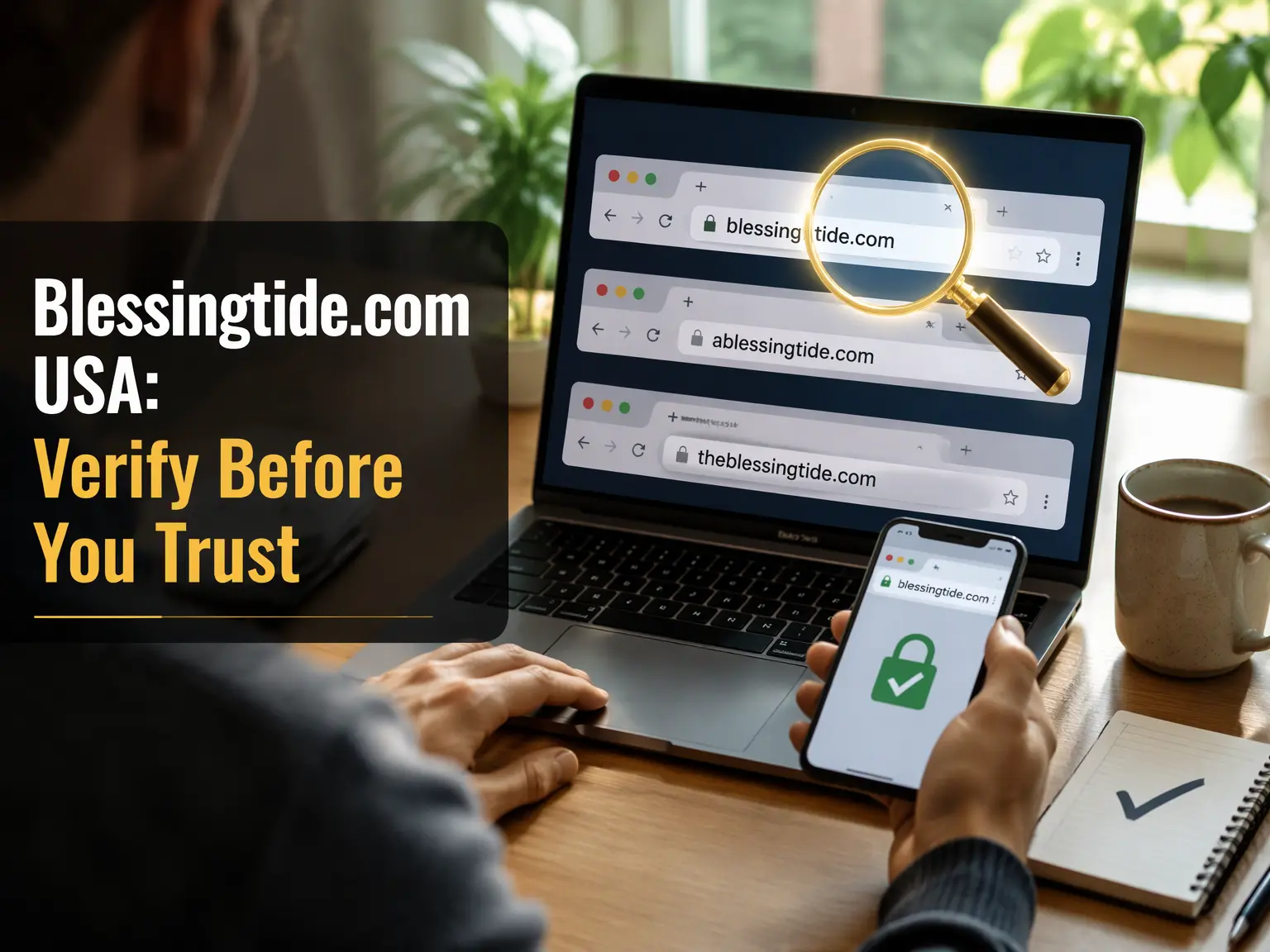
Ever typed blessingtide.com usa into Google and ended up more confused than before? You’re in good company. When I researched the phrase in November 2026, I found several online explainers that disagree with each other, plus at least four other websites with nearly identical, easily confused names. That’s the real story here. Below, I’ll sort out what Blessingtide.com USA most likely refers to, how outside writers describe the site, what’s known and unknown about its ownership, and how to avoid lookalike domains. I’ve tied every claim to what published sources actually say, and I’ve flagged what nobody has confirmed. If you’re a reader in the United States wondering whether to trust this name, start here.
What Is Blessingtide.com USA?
Blessingtide.com USA is a search phrase, not a company name. People type it hoping to learn about the website at blessingtide.com from an American point of view. Outside writers describe that site as an English-language blog that began with Christian prayers, Bible verses and positive messages. The word USA doesn’t point to a separate American brand, and published reviews say no verified U.S. edition exists. Readers in the States can simply open the public articles like anyone else. So the cleanest definition is this: one main domain, one popular search variation, and a lot of similar names circling around both of them online. That’s all it tells you.
Why the USA Part Confuses Searchers
Adding a country to a domain feels harmless, yet it changes what you get back. Search engines treat the phrase as a mix of two goals: finding the website and checking its connection to America. Publishers noticed that mix and began writing explainers aimed at the phrase itself, which is why the results page fills up with near-identical guides. Some of those guides even use the phrase as their own site tagline. If you’ve felt that every answer sounds slightly different, you’re right. Different writers are describing different pages, sometimes different domains, and sometimes just repeating each other without checking the source. Always read original sources, not summaries.
What I Found Researching Blessingtide.com
Here’s what I found. Searching the bare domain returned articles from magazine-style blogs dated between August and October 2026, along with About pages from several similarly named sites. None came from a major newspaper, a government record or a business registry. That doesn’t make them wrong, but it means the evidence is pretty thin and mostly secondhand. I couldn’t open the main site’s pages directly myself, so everything about it below comes from those published descriptions. Where two sources conflict, I’ll say so. Where only one source makes a claim, I’ll say that too. You deserve to know exactly which statements are solid and which are simply repeated.
How the Site Began: Faith, Prayers and Blessings
According to 9t9Magazine, BlessingTide first focused on Christian prayers, Bible verses, blessings and positive messages. Older posts reportedly include morning prayers, weekday blessings and birthday wishes, which fits the name. Another explainer says the brand’s own pages frame the site around peace, gratitude and encouragement. That origin story explains why many readers still arrive looking for a short prayer or a verse to share with family. It also explains the mismatch some people feel later, when they open the site and find topics that look nothing like devotional writing. The name describes where the site started, not necessarily everything it publishes today. Context helps you read it fairly.
How the Content Has Widened Since
Published descriptions say the site now reaches well beyond faith. The 9t9Magazine review lists software, electronics, manufacturing, social media tools and home services among its newer subjects. A separate explainer calls it a general-interest publication with faith roots. Neither source gives a launch date or a reason for the shift, and the first says so directly. That gap matters. A site that changes direction can attract very different audiences, and its older reputation may not match its current content. If you remember BlessingTide as a prayer site, check recent posts and publication dates before assuming today’s articles carry the same purpose, tone or standards. Always check the date.
Sample Topics Reported on the Site
Specific examples help more than labels. The 9t9Magazine review mentions posts about TeamViewer and Splashtop pricing, an electronic component numbered TMS320F28335PGFA, outdoor LED display boards, rubber injection molding, shipping packaging, and home remodeling in Sammamish, Washington. It also mentions a health-related product article. That’s quite a spread. Technical and pricing topics age quickly, so a post from months ago could already be outdated. For component details, official manufacturer documents are the safer reference. For software prices, the provider’s own page wins. Use the site, if you like, to learn basic terms, then confirm anything you plan to buy, install or inject. Always confirm before you spend or act.
Who Owns Blessingtide.com? What We Know
Ownership is the question every explainer raises, and none of them answers it. 9t9Magazine states plainly that the legal owner hasn’t been clearly confirmed and that no registered company name or verified headquarters appears on the site. No source I read mentions a registry entry, court record or named executive tied to it. That’s not proof of anything improper. Plenty of small blogs run under a brand name or an individual’s handle. It simply means you can’t verify who’s accountable if an article is wrong. When ownership stays hidden, the sensible response is moderate trust: fine for light reading, cautious for decisions involving money, health or personal data.
The Zyan-Ch Name and Where It Appears
One name keeps surfacing: Zyan-Ch. A Rawmags explainer says that brand label appears on blessingtide.com, alongside an info@ contact address on its policy pages. Meanwhile, the About page of ablessingtide.com, a different domain with an extra letter at the front, says that faith platform was created and managed by Zyan-Ch. Do those two sites belong together? The sources I found don’t say. A shared name suggests a connection, but it doesn’t prove common ownership, and 9t9Magazine warns that a branding label isn’t evidence of a legal owner. Treat the link as a lead worth noting, not a conclusion. Without a registry record, that’s as far as evidence goes.
Authors Named on Published Articles
Bylines tell you something, though not everything. 9t9Magazine reports that articles on the site appear under several names, including Emilia for software, LED display and manufacturing topics, webpulse for electronics and social media tools, and Noureen Rehman for blessing-related posts. The same review adds that these names don’t confirm anyone’s job title, expertise or full identity. That’s a very common situation on small publications. For a prayer or a birthday wish, credentials hardly matter at all. For a technical specification or a health product, they matter a lot. Look for an author page, a stated background and cited sources before you rely on an article for anything consequential.
Is Blessingtide.com Based in America?
Short answer: unknown. 9t9Magazine says the site is available to American readers, mostly writes in English, and occasionally covers U.S. places, yet its public pages don’t confirm a U.S. office or registered American company. Another site, theblessingtide.com, says readers may access its content from the USA and other regions, which is a statement about audience, not location. Those are two different things, and mixing them up is the most common error in this topic. If location affects your decision, for example before donating, buying or sharing personal details, ask for a verifiable address. A missing address isn’t an accusation. It’s simply missing information. Audience and address are different.
Five Domains, Five Different Identities
Here’s the clearest way I can show the confusion. The table below lists five names that sound alike, each with the identity its own pages or an outside review gives it. I’ve labeled where each description comes from so you can check it yourself. Notice how different the purposes are, from prayer collections to celebrity biographies to general publishing. Nothing in my research proved that these sites share an owner. Some may be related, some may be coincidence, and some may simply borrow a popular name. Until someone shows a registry record or an official statement, treat each domain as its own separate website. Check each one separately.
| Domain | How it’s described | Source |
|---|---|---|
| blessingtide.com | Faith roots, now broad topics | 9t9Magazine, Rawmags |
| ablessingtide.com | Christian platform by Zyan-Ch | Its About page |
| theblessingtide.com | General informational publisher | Its About page |
| BlessingTideUS.com | Celebrity biographies | 9t9Magazine |
| wowblessings.com | Blessings and prayers, uses the USA phrase | Its homepage |
BlessingTideUS.com and Other Lookalikes
Of all the similar names, BlessingTideUS.com deserves special attention because it contains the letters US and so looks like the American version people keep searching for. According to 9t9Magazine, it mainly publishes celebrity biographies, and no official business link between it and blessingtide.com has been verified. So if you land there expecting prayers, you’re on a different site. This is exactly how lookalikes work: they borrow familiarity. Before you read, share or trust anything, compare the full address character by character with the one you intended. Watch for added letters, swapped endings and words like US, official or online tacked onto a brand name. It takes seconds, honestly.
Is There a Separate USA Edition?
No source I found demonstrates one. 9t9Magazine says there’s no verified separate American version of BlessingTide, and the main-domain explainers I read describe the USA wording as a search habit. What exists instead are other domains with similar names, which can look like regional editions if you only skim the title. A real regional edition usually announces itself: a country selector, a distinct address under the same brand, or an official statement. None of those turned up here. If you find a page that claims to be the official U.S. site, ask what evidence it offers, and check that evidence somewhere independent. Missing proof is still useful information.
Pages the Site Reportedly Publishes
Good news first: according to 9t9Magazine, blessingtide.com has an About page, a Contact page, a Privacy Policy and a Disclaimer. Those are standard for blogs, and they give you somewhere to start. The Disclaimer reportedly warns that content may contain errors or omissions and shouldn’t replace qualified medical, legal or financial advice. That’s honest, and worth taking seriously. Still, having policy pages is a baseline, not a certificate of quality. Plenty of weak sites publish them. Read the pages yourself, notice what’s missing, such as a named company, a physical address or editor biographies, and weigh the whole picture instead of ticking boxes. Trust grows with real transparency.
Privacy and Data Collection Basics
The reported Privacy Policy says the site may collect names and email addresses through contact forms or sign-ups, plus technical data such as browser and device details, IP addresses, pages visited and cookies. That’s typical for a blog, and it means free reading still involves some tracking. These are the site’s own statements, and no outside privacy audit has confirmed them. My advice is practical. Read without logging in. Use a separate email address if you subscribe to anything. Decline optional cookies when the banner lets you. Never type banking or identity details into a content site, because articles, however friendly, never need them. Small steps really matter.
Guest Post Listings and What They Prove
Search the name and you’ll find third-party sellers advertising guest-post placements on BlessingTide. What does that tell you? Less than you’d think. 9t9Magazine notes these listings don’t prove every article is sponsored, and they don’t confirm any direct deal with the site’s owner. Official prices, traffic and income figures haven’t been verified either. For readers, the takeaway is modest: some content on any site that sells placements may exist to carry links rather than to inform you. Check whether an article discloses sponsorship, and be extra careful with posts that push a product, a service or an outbound link. Disclosure separates advice from advertising, so look for it.
Is Blessingtide.com USA Legit and Safe?
Legit and safe are two separate questions. Legit: the site is active, publishes articles with dates and bylines, and has standard policy pages, so nothing I read calls it a scam. Safe: 9t9Magazine says it uses HTTPS, but also stresses that no full independent security review exists, and HTTPS only means the connection is encrypted. Blessingtide.com USA, as a phrase, can’t be rated at all, because it isn’t a site. My honest rating for the main domain is cautious, not alarmed. Read freely, skip unknown downloads and suspicious ads, and keep sensitive decisions with sources that name their owners and take responsibility. That’s a fair, balanced starting position.
How to Check a Domain Yourself
You don’t need special skills. Start by typing the address yourself instead of tapping a link. Then open lookup.icann.org and search the domain; you’ll see registrar details and a creation date, though privacy services often hide the owner. Next, check the Wayback Machine at archive.org to see how the site looked months ago, which helps explain topic shifts. Search the domain in quotation marks to see who else writes about it. Finally, try Google’s Safe Browsing site status page in its Transparency Report. None of these proves honesty, but together they take about five minutes and replace guesswork with evidence. Write down what you find and the date.
How to Judge Articles on the Site
Because topics vary so widely, judge each article on its own. Ask who wrote it, when it was published and whether it cites anything verifiable. A birthday blessing needs none of that. A pricing comparison needs dates and screenshots. A health product article needs medical sources. Watch for confident numbers with no origin, repeated phrases across unrelated posts, and headlines promising more than the text delivers. Compare one key fact with an official source; if it matches, your trust can rise a little, and if it doesn’t, you’ve learned something valuable. The same method works on the explainers I used for this very article. Trust must be earned.
Health, Product and Technical Posts Need Official Sources
Some subjects carry real consequences. The reported content includes a health-related product post, software pricing and electronic component details. For medical products, the FDA and your own clinician are the right authorities. For component specs, the manufacturer’s datasheet is the document engineers actually use. For software pricing, the vendor’s pricing page is the only number that counts, since plans change without notice. A general blog can explain vocabulary and give you a starting point, but it can’t know your health, your project or your budget. Treat it like a friendly neighbor’s advice: kind, maybe useful, never final. If an offer looks too good or too urgent, slow down.
Reading Faith Content on a Mixed-Topic Site
If you’re here for prayers and blessings, you can probably relax; that content is low risk. The care starts when faith pages sit beside commercial or technical posts under the same brand. Pay attention to design cues. Are there heavy ads? Do devotional pages link out to unrelated services? Does the tone shift suddenly? If you want purely faith content, you might prefer a church website, a denominational publisher or a Bible reference tool whose ownership is public. Those sources won’t replace a quiet morning read, but they’ll tell you who stands behind every word. Mixed-topic sites can still be pleasant, but you always stay in charge here.
Common Mistakes When Researching This Name
I noticed the same slip-ups across the explainers themselves. Writers treat the USA label as a location. They copy each other’s claims without checking the site. They mix up similarly named domains and merge their descriptions into one. They present a branding name like Zyan-Ch as a confirmed owner. Readers make mistakes too: trusting the first result, assuming a padlock means honesty, or sharing a link without opening it. The antidote is boring but effective. Name the exact domain, cite where each fact comes from, and say out loud what’s unconfirmed. If an article doesn’t do that, discount it accordingly, including this one. Accuracy starts with careful reading.
Pro Tips for U.S. Readers
A few habits will save you time. Bookmark the exact domain once you’ve verified it, so searches never decide for you. Add the date you visited to any note you keep, because this site reportedly changes. If you share links with older relatives, send the full address in plain text so nobody types a lookalike. Use a password manager; it won’t autofill on a fake domain, which is a surprisingly good alarm. And when a post asks you to buy, subscribe or install, pause for a day. Real value survives a night of sleep, and scams rarely do. Small habits like these protect you better than most tools.
What Blessingtide.com Could Do to Build Trust
Small changes would settle most of the questions I’ve raised. Publish the legal owner or operating company. List a mailing address and a contact email on the same domain. Add author pages with real backgrounds. Label sponsored posts clearly. Date-stamp updates when prices or specs change. State plainly whether the site connects to ablessingtide.com, theblessingtide.com or BlessingTideUS.com. None of this costs much, and all of it answers the searches behind Blessingtide.com USA. Transparency also helps with search visibility, because Google’s quality guidance rewards clear signs of who’s responsible for a site’s content and why it exists. Until that happens, readers must do the checking themselves, carefully and patiently.
Conclusion: Blessingtide.com USA in 2026
Here’s the short version. Blessingtide.com USA is a search phrase tied to blessingtide.com, a blog described as beginning with faith content and now covering many topics. Its owner and location aren’t confirmed, no separate U.S. edition has been verified, and several similarly named domains describe themselves very differently. Read for inspiration if you like, but confirm health, money and technical details with official sources, and always check the exact address before you trust a page. If verified ownership details ever appear, they’ll change the picture. Until then, you’re better informed than most searchers, and that’s a solid place to start. Check, compare, confirm, then enjoy the good parts.