
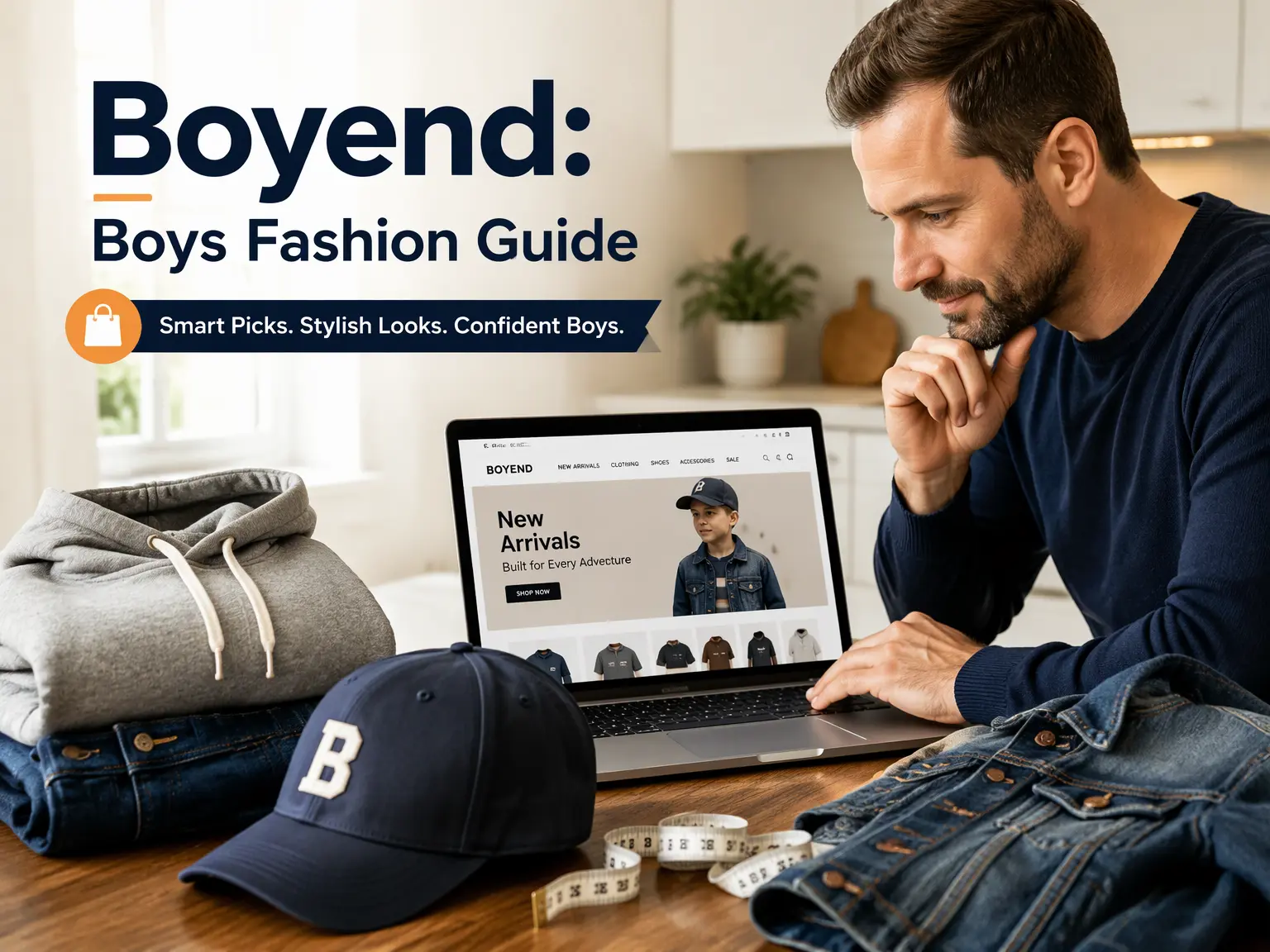
Picture this: it’s early November, your son has outgrown last year’s jacket, and you’ve got twenty minutes before practice. You open a browser, type Boyend, and wonder whether it’s the right place to shop. That’s a fair question, because the name shows up in more than one context online. Boyend is presented as an online boys fashion store selling hoodies, jackets, jeans, joggers, cargo pants, and accessories. This guide covers what that means for US families, how to size and compare pieces, which safety and privacy rules matter, and how to verify details before you pay. Treat it as a checklist, and always confirm current policies on the store itself.
What Boyend Actually Is
Boyend is described in recent coverage as an online fashion store built around clothing and accessories for boys. A September 2026 write-up from Thinkly Magazine lists casual tops, hoodies, jackets, jeans, joggers, cargo styles, caps, belts, and watches.
That focus is the whole appeal. A giant marketplace throws thousands of unrelated products at you, while a specialty storefront narrows the search to a wardrobe’s worth of items. Still, I’d treat any secondhand summary as a map rather than the territory.
Prices, stock, and product lines change constantly, and a magazine article can’t tell you what’s available today in your son’s size. So open the store pages yourself, read individual listings, and check the policy links in the footer.
If a listing feels thin, that’s useful information too. Good retailers tell you what a garment is made of, how it fits, and how to wash it. If those basics are missing, slow down before you order anything from any shop. Treat Boyend like any new store: promising, but unproven until tested.
Why the Name Boyend Causes Confusion
Search the word and you’ll notice something odd. Some pages treat Boyend as a shopping destination, while others use it as a youth culture label tied to gender expression and social media style. One brand-industry style article, for example, frames it as an aesthetic movement rather than a store.
I couldn’t verify where that usage comes from, so I wouldn’t lean on it. This guide sticks to the retail meaning, because that’s what most parents comparing prices and sizes actually need. The mix-up matters for a practical reason.
Low-quality pages often recycle one keyword across unrelated topics, which makes it harder to tell what’s real. Before you enter payment details anywhere, confirm you’ve landed on the actual storefront by checking the web address, finding a working contact page, and reading the policy documents.
A site that hides who runs it, lists no business address, or offers vague return terms deserves extra caution, no matter how polished its photos look. Searching Boyend plus the word shop or clothing helps narrow results.
The Boyend Style in Plain Terms
Style-wise, the Boyend catalog leans casual, modern, and a little streetwear-inspired. Think graphic tees, relaxed hoodies, cargo pants, bomber jackets, and caps rather than formal suits. That matches how most American kids actually dress for school, weekends, and family errands.
The useful trick is separating basics from statement pieces. Basics are the plain tees, dark jeans, and neutral sweatshirts that go with everything. Statement pieces are the loud graphics, patterned jackets, or bold colors that grab attention.
A wardrobe built mostly from basics, plus two or three statement items, gets worn more often and looks more put together. Picture a twelve-year-old with six hoodies that only match one pair of pants. He’ll wear the same outfit all week. Now picture one hoodie, one denim jacket, and three neutral tees that all mix.
That’s the difference between a crowded closet and one that works. Boyend’s range seems to cover both ends, so decide your ratio before you open your cart. That balance makes Boyend easy to plan around for most budgets.
Choosing Tops at Boyend
Tops do the heavy lifting in any boy’s wardrobe, so they’re the smartest place to start. The Boyend range reportedly includes T-shirts, polos, button shirts, and overshirts, and each plays a different role. T-shirts handle gym class, summer afternoons, and layering under everything else.
Polos step up a notch for school picture day, church, or a family dinner. Button shirts and overshirts add structure, and an overshirt worn open over a tee is one of the easiest outfit upgrades I know.
When you compare listings, look past the photo and check the collar style, sleeve length, and fabric weight. A thin cotton tee that looks great on a model may feel see-through after a few washes. Heavier jersey usually holds its shape better. Buy in small batches, too.
Order two or three tops first, see how they wash and wear over a month, and then go back for more of whatever survives the laundry and the playground. Boyend tops seem built for exactly this kind of easy mix-and-match, everyday dressing.
Hoodies and Sweatshirts From Boyend
Hoodies are probably the most-worn item in most boys’ closets, which is exactly why they deserve a careful look. A hoodie works as a standalone layer in mild weather and as a warm middle layer under a jacket when temperatures drop.
Sweatshirts without hoods give a cleaner silhouette and suit kids who dislike fabric bunching behind their necks. Fleece lining adds warmth but can pill after repeated washing, so check whether a listing describes the interior fabric. Color choice matters more than most people expect.
Neutral grays, blacks, and navy shades pair with nearly every pair of jeans, joggers, and cargo pants, while bright colors and large graphics limit your options. If your son is between sizes, resist the urge to buy a much larger hoodie as an investment.
Oversized fits are a style choice, but sleeves that swallow his hands are just uncomfortable. Pick the fit he’ll actually wear this season, then replace it when he grows. Each Boyend hoodie should earn its place by matching three different bottoms.
Jackets and Outerwear to Compare
Outerwear is where function and fashion collide, so compare carefully. The Boyend catalog reportedly features bomber jackets, denim jackets, windbreakers, rain jackets, and puffer vests. Each solves a different problem. A denim jacket is a classic casual layer but offers little warmth or rain protection.
A bomber looks sharp and handles cool fall evenings. A windbreaker packs small and blocks gusts, while a rain jacket only earns its keep if the seams and fabric are actually water-resistant. Puffer vests keep the core warm and leave the arms free, which many active kids prefer.
Before you buy, read the insulation details, lining description, closure type, and pocket layout. Zippers should feel sturdy, and cuffs should be easy for small hands to manage.
If you live somewhere with real winters, such as Minnesota or upstate New York, a vest or windbreaker won’t replace a proper coat. Match the jacket to your local weather, not just to the photo. When comparing Boyend jackets side by side, weather suitability should outrank looks every time.
Jeans, Joggers, and Cargo Bottoms
Bottoms decide whether an outfit is comfortable enough to survive a full school day. Boyend’s lineup reportedly covers jeans, joggers, cargo pants, cargo shorts, and fleece sweatpants. Jeans remain the most versatile choice because denim pairs with almost any top and hides grass stains better than light fabrics.
Joggers and fleece sweatpants trade structure for comfort and suit relaxed days, travel, and sleepovers. Cargo styles add extra pockets that kids love and a streetwear look that’s popular right now.
When you shop online, pay attention to waist type, since elastic or adjustable waistbands forgive growth spurts better than fixed waists. Check the inseam, rise, and fit description too. Slim, regular, relaxed, and husky cuts can feel completely different even at the same listed size. Pay attention to knees as well.
Active boys wear through denim there first, so heavier fabric or reinforced construction can stretch a purchase across two seasons instead of one, which saves real money over time. Boyend’s cargo and jogger options suit growing, constantly moving, active kids.
Accessories That Finish the Look
Accessories look minor, but they change how an outfit reads and can solve practical problems. Boyend reportedly offers caps, belts, sunglasses, watches, and bags. A cap adds streetwear attitude and shades eyes at the ballpark. A belt keeps jeans in place and cleans up the line of an outfit.
Sunglasses are worth a closer look than most shoppers give them. Check whether a pair offers UV protection, because dark lenses without it can actually be worse for eyes than no lenses at all.
Watches range from sporty digital models to cleaner analog styles, and a durable, water-resistant one makes a great gift for a tween learning to manage his time. Bags deserve measurements. A backpack that looks roomy online may not fit a laptop or textbooks.
Always compare dimensions, adjustable strap ranges, and materials instead of assuming one size fits every kid. Small items are also easy to return, which makes them a low-risk way to test a store. Boyend caps and watches also fit neatly into any gift-sized budget.
Layering Boyend Pieces Through Four Seasons
Layering is the cheapest way to stretch a wardrobe across American weather, which swings from Phoenix heat to Chicago wind chill. Start with a tee as your base layer. Add an overshirt or hoodie for the middle layer, then finish with a jacket or vest when it’s cold or wet.
In spring, a tee plus an open overshirt handles chilly mornings and warm afternoons. Summer means tees, cargo shorts, and a cap. Fall is hoodie-and-bomber season. Winter calls for a warm base, a fleece or sweatshirt, and a real insulated coat from somewhere that sells one.
The key is making sure layers fit together. A snug jacket over a thick hoodie restricts arm movement and gets abandoned by the front door. Try sizing the outer layer slightly roomier than the inner ones. Keep colors compatible, too.
When three layers share a neutral palette, every combination works, and getting a kid dressed in the morning becomes a thirty-second job. Boyend pieces in neutral colors make this whole layering system far easier.
Sizing Online Without Guessing
Sizing causes more online clothing returns than any other problem, so it’s worth doing properly. In the US, boys’ sizes typically run in groups like little boys (4 to 7) and boys (8 to 20), with husky and slim cuts at many retailers. Brand charts differ, though, so never assume your son wears the same size everywhere.
Measure him with a soft tape: chest, waist, hip, and inseam. Then compare those numbers with the size chart on each Boyend listing instead of relying on the age printed on the tag. Better yet, measure a favorite shirt or pair of jeans that already fits well and match its dimensions.
Check fit descriptions such as slim, regular, relaxed, or oversized, because they change how a garment sits. Buying one size up for growth sounds smart, but sleeves and hems that are too long cause trips and constant tugging. Boyend listings with detailed charts deserve more trust than vague ones. The table below shows what to verify for each category before you pay.
| Clothing Category | What to Check Before Buying | Common Sizing Mistake |
|---|---|---|
| Tops and tees | Chest width, sleeve length, fabric weight | Ordering by age label alone |
| Hoodies and sweatshirts | Chest, body length, fleece lining | Buying far too large for growth |
| Jackets and outerwear | Chest room for layers, insulation, closures | Choosing a snug fit over a hoodie |
| Jeans and cargo pants | Waist type, inseam, rise, fit cut | Ignoring slim versus husky cuts |
| Joggers and sweatpants | Elastic waist range, ankle cuff, length | Assuming stretch fixes a wrong size |
| Caps, belts, and bags | Adjustable range, dimensions, materials | Assuming one size fits every kid |
Reading Fabric and Care Labels
A product photo can’t tell you how a garment feels after twenty washes. Fabric details can. Cotton breathes well but may shrink if you dry it hot. Polyester resists wrinkles and dries quickly, though it can hold odors. Blends try to balance both.
Fleece warms beautifully but may pill, and denim with a little stretch usually moves better for active kids. In the United States, the Federal Trade Commission’s Care Labeling Rule requires most clothing to carry permanent care instructions, so the garment itself should tell you how to wash it.
If a store lists care guidance online, read it before checking out, since it signals how much effort a piece will take. Washing new clothes inside out, in cold water, helps graphics last longer. Skipping high-heat dryers protects both fit and color.
Boys’ clothes take a beating, so favor fabrics and stitching that match your kid’s habits. A kid who slides into second base every weekend needs tougher knees than one who mostly reads. Check each Boyend listing too.
Safety Rules Parents Should Know
Children’s clothing falls under extra safety rules in the US, and a smart shopper knows the basics. The Consumer Product Safety Commission (cpsc.gov) restricts drawstrings at the hood and neck of children’s upper outerwear, because they’ve caused strangulation injuries.
If a hoodie listing shows long strings near the neck, think twice, especially for younger boys. Children’s sleepwear in sizes through 14 must meet flammability standards, which is why cotton pajamas are either snug-fitting or treated to resist fire.
Items made for kids twelve and under also need testing for lead and certain phthalates under the Consumer Product Safety Improvement Act, and manufacturers or importers must certify compliance. You won’t see that paperwork as a shopper, but you can ask a retailer about it.
Small decorative parts matter too. Loose buttons, patches, or beads on clothing for little children can become choking hazards. Check seams and fasteners when an order arrives, and stop using anything that sheds parts. A thirty-second inspection beats a safety recall notice. Boyend shoppers should verify these.
Shipping, Returns, and Payment Checks
Clothing returns are routine, so read the return policy before you buy, not after. Look for the return window, whether items must be unworn with tags attached, who pays for return shipping, and how refunds are issued. Shipping details deserve the same attention.
Under the Federal Trade Commission’s Mail, Internet, or Telephone Order Merchandise Rule, sellers must ship within the time they advertise, or within 30 days if they don’t state one. If an order is delayed, they must tell you and offer a chance to cancel.
Payment method matters, too. Credit cards generally give you stronger dispute rights under federal law than debit cards, and you typically have 60 days from the statement date to report billing errors. Screenshot your order confirmation, product page, and any promised delivery date.
That record makes disputes simpler. Promotions and free-shipping thresholds change, so verify the final total at checkout before submitting payment. If total costs jump unexpectedly on the last page, close the tab and reconsider. Apply these checks to Boyend orders.
Privacy and Your Family’s Data
Online shopping means sharing personal information, and the details matter when kids are involved. Coverage of Boyend’s privacy material says the store may collect names, email addresses, billing and shipping details, order history, and browsing or device data.
Typical uses include processing orders, customer support, fraud prevention, and site analytics, sometimes through third-party services. Read the current policy yourself, because policies change and summaries age quickly.
In the US, the Children’s Online Privacy Protection Rule limits how websites collect personal data from children under 13, so a parent should create and control the account. Skip optional fields you don’t need, such as a child’s birthday.
Use a unique password, turn on two-factor authentication if it’s offered, and consider a virtual card number for unfamiliar shops. California residents have extra rights under state privacy law, including requesting deletion of certain data. If a store lacks a privacy policy or hides it, treat that as a red flag. Your son’s clothing size isn’t sensitive, but his name, address, and school can be.
Building a Small Wardrobe on a Budget
A smaller, smarter wardrobe often beats a bigger one. Start by counting what your son already owns, then fill gaps instead of duplicating. Try a simple formula: four tops, two bottoms, one hoodie, one jacket, and one accessory that suits the season. Cost per wear helps you decide.
A $30 hoodie worn sixty times costs fifty cents per wear, while a $15 trendy shirt worn twice costs $7.50 each time, so cheap isn’t always inexpensive. Those numbers are illustrative, but the logic holds. Favor pieces that mix with several others, and buy trendy items sparingly.
Watch end-of-season sales, but only for sizes he’ll fit next year if you’re confident about growth. Hand-me-downs from cousins or neighbors can fill gaps without spending a dime. Rotate clothes by season so the closet stays manageable.
When a purchase doesn’t fit your plan, wait a day before ordering. Impulse buys are the biggest leak in most family clothing budgets, and a short pause usually exposes them. Boyend basics can anchor that kind of plan.
Who Gets the Most From Boyend
Boyend seems best suited to a few kinds of shoppers. Parents who want one storefront for tees, hoodies, jeans, and outerwear can save time by comparing everything in one place. Teens and tweens who care about streetwear-inspired looks may enjoy the cargo styles, bomber jackets, and caps.
Gift buyers can lean on accessories, which don’t depend on exact measurements the way clothing does. Grandparents shopping from a distance, for instance, can send a cap or a watch without worrying about a growth spurt.
On the other hand, shoppers who need formal wear, toddler clothing, school uniforms, or specialized athletic gear should confirm that the catalog covers those categories before investing time. Nobody should buy because a guide sounds enthusiastic.
Compare prices with a couple of other retailers, read the policies, and start with a small order. If the first purchase arrives on time, fits as described, and holds up in the wash, you’ve learned something no article can tell you. Fans of relaxed, street-inspired looks will likely enjoy Boyend most.
Conclusion
Boyend gives American families one more place to shop for boys’ tops, bottoms, outerwear, and accessories, but a good purchase depends on your habits rather than the store’s name. Confirm you’re on the real storefront, measure your son instead of trusting age labels, and read fabric, care, and return details before checkout.
Keep safety rules in mind, especially around drawstrings and small parts. Protect your family’s data by controlling the account and reading the privacy policy. Then build slowly: a few versatile basics, one or two standout pieces, and a jacket that suits your local weather.
Start with a small test order from Boyend, watch how the clothes wash and wear, and expand only if the quality earns it. That’s how you turn online browsing into a wardrobe your kid actually wears, without wasting money on pieces that sit folded in a drawer.
Boyend can be a handy addition to your rotation, provided you stay curious, careful, and a little skeptical of anything that promises instant perfection or miracle savings.