Ever picked up a box of clamps, seen “sae hose clamp size 28 165 332” in a listing, and wondered what those three numbers actually mean? You’re definitely not alone. I went digging through manufacturer specs and catalog pages to finally sort it all out. Here’s the short version: size 28 is a real SAE number, 165 shows up as a millimeter measurement on much larger clamps, and 332 isn’t a standard SAE size at all. Getting this wrong means leaks, blown coolant hoses, or a wasted afternoon. This guide explains what each number means, how to measure your hose, and which clamp to actually buy so the job holds up right the first time.
What SAE Hose Clamp Size 28 Actually Means
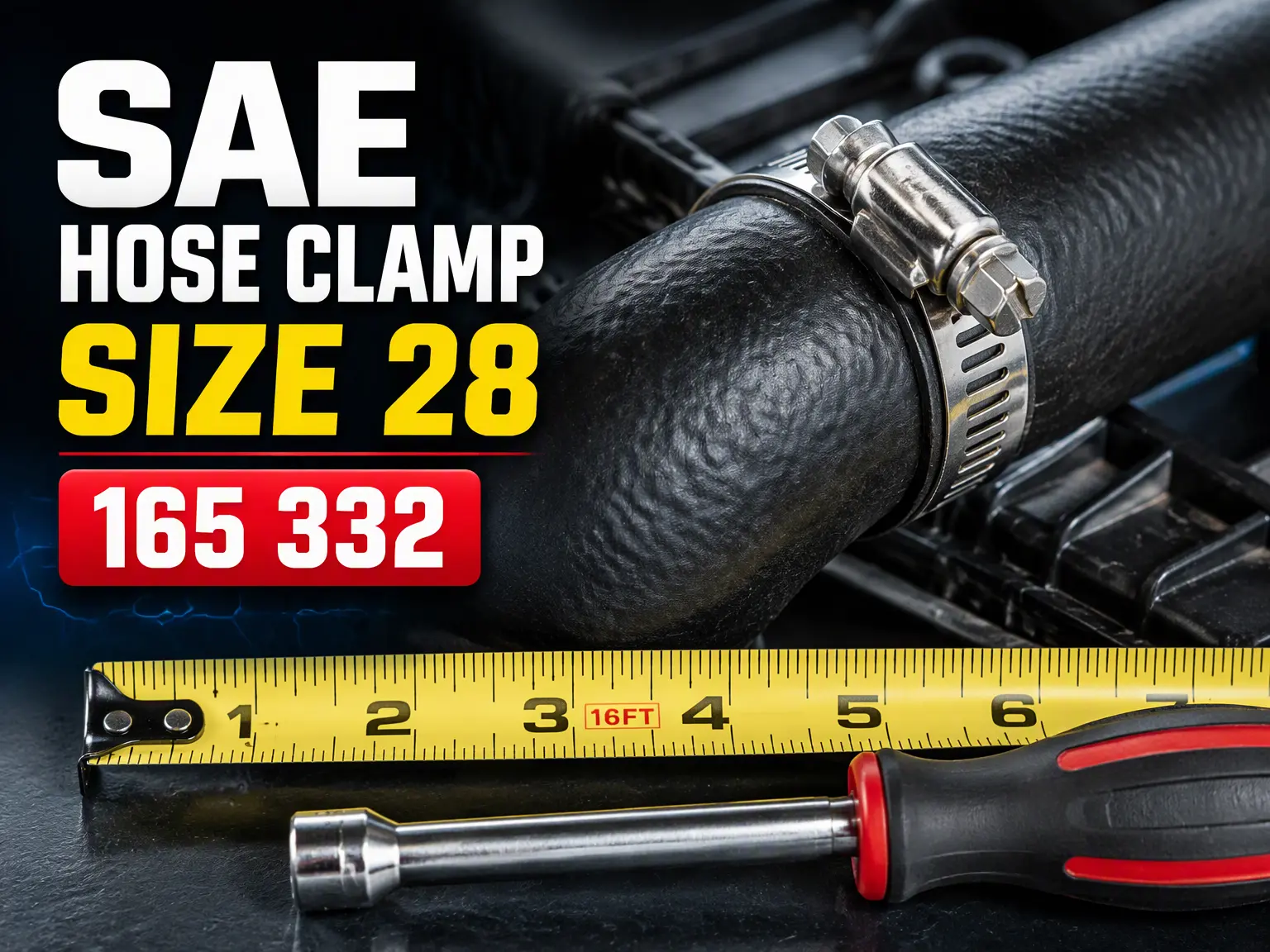
SAE hose clamp size 28 is a standardized worm-drive clamp number set under SAE J1508. It tells you the clamp opens and closes across a diameter of 1-5/16 to 2-1/4 inches, or roughly 33 to 57 millimeters. The number isn’t an inch measurement, so don’t read it as twenty-eight inches. It’s simply a label that every major manufacturer shares.
Size 28 Clamping Range and Band Width
Most size 28 clamps use a 1/2 inch band, though Breeze Aero-Seal models run 9/16 inch wide. The sweet spot sits in the middle of the range, not at either extreme. Marine-grade versions from Trident narrow the range to 1-3/4 through 2-1/4 inches. Always check the manufacturer’s range before ordering, because small differences change how well the clamp seals.
What 165 and 332 Mean in SAE Hose Clamp Size 28 165 332 Listings
Here’s what I found about the extra numbers. The figure 165 matches the upper limit, in millimeters, of a size 96 clamp, which covers 92 to 165 millimeters. The number 332 doesn’t match any standard SAE size I could verify. It’s likely a part number, pack code, or listing label, so confirm the stamped number on the band itself.
SAE Clamp Sizes Compared
The table below compares three sizes pulled from McMaster-Carr’s catalog. Notice how size 28 sits in the middle of the range, handling common coolant and intake hoses. Smaller numbers usually suit light vacuum lines, while bigger numbers handle ducting. If your hose falls between two sizes, pick the clamp whose range puts your measured diameter right near its center.
| SAE Size | Clamp Range (Inches) | Clamp Range (mm) |
|---|---|---|
| 6 | 7/16″ to 25/32″ | 11 to 20 |
| 28 | 1-5/16″ to 2-1/4″ | 33 to 57 |
| 96 | 3-5/8″ to 6-1/2″ | 92 to 165 |
How to Measure Your Hose Before Buying
Measure the outside diameter of the hose with the fitting already inserted, because the barb stretches the rubber. Wrap a flexible cloth tape gently around it, or use calipers for better precision. McMaster-Carr advises choosing a clamp whose range puts your number in the middle. If the hose looks squeezed or aged, let it relax fully and measure again.
Stainless Steel Versus Carbon Steel Bands
Most standard size 28 clamps pair a 301 stainless band with a plated carbon steel screw, which balances cost and rust resistance. For boats, wet engine bays, or road-salt states, I’d happily pay extra for all-316 stainless. It resists corrosion far better overall. Plated screws can rust shut over time, making removal frustrating when the hose finally needs replacing.
Perforated and Non-Perforated Bands
Perforated bands have slots that the screw threads grip, and they can bite into soft hose. Non-perforated bands are smooth inside with rolled edges, which protects the rubber and boosts clamping force. Trident’s marine 316 non-perforated clamp is one example. For thin-walled silicone hose, the smooth style is usually the much safer choice because it won’t cut the cover.
Where Size 28 Clamps Get Used
Suppliers list size 28 clamps for radiator hoses, heater lines, fuel lines, air lines, and vacuum connections. You’ll also find them on intake tubing and general shop plumbing. I’ve seen them hold upper radiator hoses on older work trucks for several years without trouble. They’re not meant for high-pressure fluid lines, where crimped or constant-tension clamps usually work better.
How to Install a Worm Gear Clamp Properly
Slide the clamp onto the hose end first, then push the hose fully onto the fitting. Position the band about a quarter inch from the hose end, over the barb. Turn the screw with a nut driver until snug, then check alignment. The housing shouldn’t sit on a seam or ridge. Tighten gradually, finishing with a final quarter turn.
Recommended Tightening Torque
Boeing’s product listing for the Breeze Aero-Seal 10028H gives a torque range of 45 inch-pounds, and Trident recommends 45 to 60 inch-pounds for its stainless model. A small inch-pound torque screwdriver removes guesswork. Overtightening strips the screw or cuts the hose, while undertightening leaves slow weeping leaks. Recheck the clamp after the first heat cycle, since rubber settles slightly.
Common Mistakes With SAE Hose Clamp Size 28
The biggest mistake is buying by the number without measuring. Others include reusing rusted clamps, placing the housing on a ridge, and tightening past the point of snug. Another is trusting a listing like sae hose clamp size 28 165 332 without checking the stamped size. Spend two minutes verifying, and you’ll skip the second trip to the store.
Price and Pack Size Expectations
Prices vary widely by pack size and material. The table shows listings I found in recent searches, though stock and pricing change often. Buying a 10-pack usually costs less per clamp than singles, and it leaves spares for the next repair. Premium marine or silicone versions cost more, so decide whether the extra durability truly matters for your hose.
| Product | Pack | Listed Price |
|---|---|---|
| Crimp Supply 21A15010 (stainless) | 10 | $11.00 |
| Breeze Liner stainless | 10 | $17.99 |
| DiversiTech B-28H | 1 | $2.95 |
| Gates 32328 | 1 | $4.03 |
Pro Tips for Leak-Free Connections
Double clamp critical connections, as Trident suggests for important hose ends. Keep a few extra clamps in the toolbox, and wipe the barb completely clean before assembly. Replace clamps whenever you replace hoses, since metal fatigue builds quietly. Use inner-liner versions, like Gates, on soft hose. A drop of light oil on the screw threads helps it turn smoothly.
Checking Listings Before You Order
Before ordering, confirm four things: the SAE number, the diameter range, the band width, and the material. Reputable sellers print the size on each clamp. If a listing mentions numbers like 165 or 332 without explaining them, ask the seller or compare against a manufacturer catalog. Matching your measured hose diameter to the stated range is what counts most.
Conclusion
So, here’s the bottom line on sae hose clamp size 28 165 332. Size 28 fits hoses with a 1-5/16 to 2-1/4 inch outside diameter, 165 relates to a much larger size 96, and 332 needs verification. Measure first, choose your material, torque it properly, and recheck. Do that, and you’ll get a leak-free seal you can truly trust.